
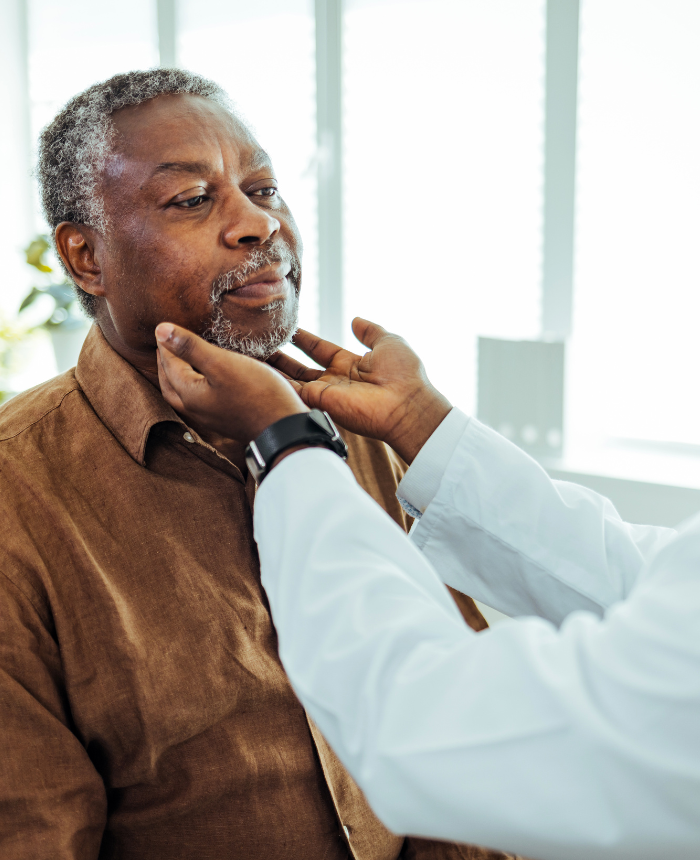
Head and Neck Cancers
What are head and neck cancers?
Head and neck cancers involve abnormal cell growth that often starts in the inside of the mouth, throat, or voice box. Additionally, they may develop in the salivary glands, sinuses, muscles, or nerves in this area.
Cancerous cells also sometimes spread from these areas to the lymph nodes in the neck.
Who is at risk for head and neck cancers?
Head and neck cancers are twice as common in men than they are in women, and they mostly affect those over age 50.
Head and Neck Cancers
What are head and neck cancers?
Head and neck cancers involve abnormal cell growth that often starts in the inside of the mouth, throat, or voice box. Additionally, they may develop in the salivary glands, sinuses, muscles, or nerves in this area.
Cancerous cells also sometimes spread from these areas to the lymph nodes in the neck.
Who is at risk for head and neck cancers?
Head and neck cancers are twice as common in men than they are in women, and they mostly affect those over age 50.
Some head and neck cancer risks are related to lifestyle, such as many years of smoking or alcohol consumption. Other risk factors may be related to genetics or past exposure to certain viruses.
Common risk factors may include:
- Tobacco and alcohol use
- Infection related to some types of human papillomavirus (HPV), a sexually transmitted disease
- Occupational exposure to certain industrial materials like asbestos and wood dust
- Past exposure to ionizing radiation
- Epstein-Barr virus
- Genetic disorders
What are some symptoms of head and neck cancers?
Keeping an eye out for potential symptoms can help you and your healthcare provider take quick action to test for and treat head and neck cancers. Although symptoms will differ depending on the type of cancer, some more common ones include:
Lumps or sores in the mouth or throat that don’t go away
Difficulty swallowing
Hoarseness or other changes in the voice
Unusual bleeding or pain in the mouth
Ear pain, ringing in the ears or trouble hearing
Chronic sinus infections or bloody nasal discharge
Swelling or masses under the chin, around the jaw, or in the neck
What treatments are available for head and neck cancers?
There are many treatment options for head and neck cancers, thanks to increased research and technology. Head and neck cancer radiation therapy is common, as are other treatment methods like chemotherapy, targeted therapy, and immunotherapy. Depending on factors like the location and stage of the cancer, you may receive a combination of these treatments.
When it comes to radiation treatment, there are several different possibilities.
Intensity-modulated radiation therapy (IMRT) is a powerful radiation treatment that uses energy, such as X-rays or protons, to kill cancer cells. It is designed to keep the radiation focused on the cancer cells and minimize the amount of radiation sent anywhere else.
Volumetric modulated arc therapy (VMAT) uses a machine that rotates around your body and sends out multiple levels of radiation at the cancer cells. This is one type of IMRT.
Image-guided radiation therapy (IGRT) uses images taken before and after treatment to help guide the process. This system may make it possible to use higher doses of radiation, if necessary. This could lead to a shorter course of radiation overall.
What are some common side effects of radiation therapy for head and neck cancers?
Although head and neck cancer treatments including radiation will come with side effects, taking good care of yourself before and after treatments can help minimize discomfort.
Side effect: Irritated skin
What you can do: Avoid harsh soaps, colognes, and cosmetics. Keep your skin moist by applying a good, quality moisturizer, but be sure to confirm with your doctor that you’re using products that won’t cause further irritation.
Side effect: Dry mouth
What you can do: Drink water throughout the day to stay hydrated. While you want to avoid sugary foods, sucking on ice chips or sugar-free hard candies can help stimulate saliva production and prevent your mouth from drying out.
Side effect: Decreased appetite
What you can do: As much as possible, eat mild, soft foods that are easy to swallow, and take your time. Keep an eye on your weight and talk to your doctor if you notice significant changes.
Schedule Your Appointment Today
If you have been referred for radiation therapy, the choice of where to receive treatment is yours. Our Brockton clinic offers the advanced treatments you need at a convenient location. Call us today to book a consultation.